


Introduction
The ride-hailing industry is evolving as customers look for convenient transportation, transparent pricing, reliable drivers, and easy digital booking experiences. At the same time, entrepreneurs are exploring new ways to build taxi booking platforms that connect passengers and drivers while maintaining efficient operations.
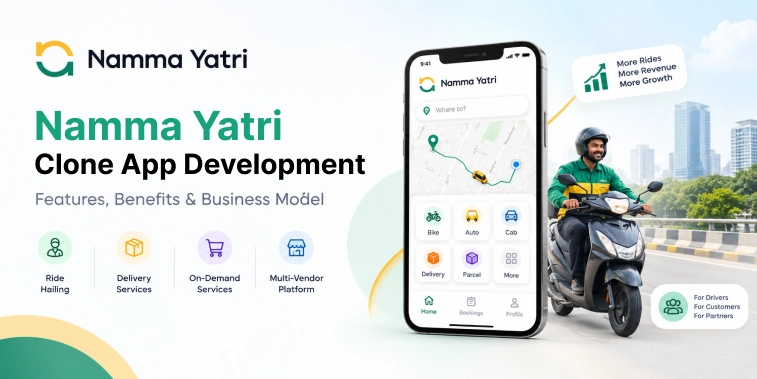
A Namma Yatri Clone App is a customizable ride-hailing application inspired by the Namma Yatri mobility platform. It can help businesses develop a digital taxi booking solution that connects passengers with drivers through features such as ride booking, fare estimation, driver tracking, digital payments, and trip management.
For entrepreneurs, Namma Yatri Clone App Development offers an opportunity to build a local or regional mobility platform tailored to specific customer needs. Depending on the business strategy, the application can support different vehicle categories, driver onboarding, location-based bookings, and flexible pricing models.
However, building a successful taxi booking app requires more than creating a mobile interface. Businesses must consider driver availability, passenger safety, operating costs, customer acquisition, and local transportation regulations.
This guide explores what a Namma Yatri Clone App is, how it works, its essential features, business benefits, revenue models, development process, and the important factors to consider before launching a ride-hailing business.
What Is a Namma Yatri Clone App?
A Namma Yatri Clone App is a customizable taxi booking application designed to connect passengers with drivers through a digital platform. It takes inspiration from the general ride-booking experience associated with Namma Yatri while allowing entrepreneurs to establish their own brand, pricing policies, service areas, and operational workflows.
Unlike traditional taxi dispatch systems that may depend heavily on phone calls, a mobile ride-hailing application enables customers to request rides, view estimated fares, receive driver details, and track booking progress from their smartphones.
A typical solution includes three primary components:
- Passenger app: Enables users to book rides, select pickup and drop-off locations, check estimated fares, track drivers, and manage payments.
- Driver app: Allows drivers to manage availability, receive ride requests, navigate routes, review trips, and monitor earnings.
- Admin dashboard: Helps business owners manage passengers, drivers, bookings, pricing, commissions, complaints, and business reports.
Depending on the target market, the platform can support cars, auto-rickshaws, motorcycles where legally permitted, or other local transportation options.
Entrepreneurs can also customize the application with regional languages, locally preferred payment methods, scheduled rides, business accounts, and additional operational features.
The goal is to create a convenient booking experience while giving the business owner tools to manage the transportation marketplace efficiently.
Key Features of a Namma Yatri Clone App
The right features make a ride-hailing application convenient for passengers, useful for drivers, and manageable for administrators. Businesses should prioritize features according to customer expectations and the requirements of their launch market.
1. Easy Registration and Login
A simple onboarding process helps passengers and drivers access the application without unnecessary friction.
The platform can support suitable authentication methods, profile management, account recovery, and verification procedures. Driver registration should include the required documentation and eligibility checks for the relevant jurisdiction.
2. Location-Based Ride Booking
Passengers should be able to enter pickup and destination locations using a map or address search.
The application can suggest addresses, save frequently used places, and display relevant pickup information. Accurate location selection reduces confusion and improves coordination between passengers and drivers.
3. Fare Estimation and Pricing Transparency
Fare estimation helps passengers understand the expected cost before requesting a ride.
The business can configure pricing according to distance, time, vehicle type, local operating requirements, and applicable fees. The application should explain relevant charges and communicate any circumstances that may affect the final fare.
4. Real-Time Driver Tracking
GPS-based tracking allows passengers to view the driver’s approach to the pickup location and follow the trip when supported.
Drivers can use navigation tools to locate passengers and reach destinations. Tracking functionality depends on device permissions, location accuracy, connectivity, and mapping services.
5. Driver Information
Before a ride begins, the application can display relevant driver information, including the driver’s name, vehicle details, registration information, and profile image where appropriate.
Providing verified trip information helps passengers identify their assigned vehicle and supports a more transparent booking experience.
6. Ride Request Management
The driver application should provide clear information about incoming ride requests and allow drivers to accept or decline them according to platform rules.
Once a ride is accepted, drivers can update the trip status, navigate to the passenger, and mark the ride as started or completed.
7. Multiple Payment Options
Payment flexibility is important for reaching customers with different preferences.
Depending on the market, the application can support cash, cards, mobile payment services, or other approved payment methods. Payment records should help the business manage transactions, refunds, reconciliation, and applicable driver earnings.
8. Ride History and Digital Receipts
Passengers should be able to review previous rides, trip details, fare breakdowns, and available receipts.
Drivers can access their trip history and relevant earnings records. These features make it easier to review transactions and resolve booking-related questions.
9. Ratings and Reviews
Passengers can provide feedback about their ride experience, while the platform can establish fair procedures for reviewing complaints.
Ratings should be combined with appropriate support processes rather than used as the sole measure of driver performance.
10. Notifications and Alerts
Push notifications, SMS, or other supported communication methods can inform users about booking confirmations, driver assignments, ride status changes, payments, and important account updates.
Businesses should ensure that notifications are timely and useful, with suitable controls for non-essential promotional messages.
11. Customer Support and Issue Resolution
A support module allows passengers and drivers to report problems, request assistance, and follow the status of complaints.
Support teams should have access to relevant booking information while following privacy and access-control requirements.
12. Scheduled Ride Booking
Scheduled bookings allow passengers to request a ride for a future date and time, where the business supports this feature.
The platform should communicate booking confirmation and handle driver allocation according to its scheduling policies. Scheduled rides can be useful for airport transfers, work commutes, and planned appointments.
Essential Features of the Driver App
The driver application is central to the daily operation of a taxi booking business. Its design should help drivers manage requests, complete trips, and understand their earnings.
Driver Registration and Verification
Drivers can submit the required personal, vehicle, and licensing information through the application or an approved onboarding process. Administrators review the information before enabling access to ride requests.
Verification requirements should reflect local transportation laws and platform policies.
Online and Offline Availability
Drivers should be able to indicate whether they are available to receive ride requests. Availability controls help the platform identify active drivers and avoid assigning requests to unavailable partners.
Navigation and Route Guidance
Integrated navigation can help drivers reach pickup locations and destinations efficiently. The application should provide clear route information and allow drivers to follow supported navigation workflows.
Trip and Earnings Management
Drivers need access to active bookings, completed trips, earnings summaries, applicable deductions, and payment status.
Transparent earnings information helps drivers understand how their work translates into income under the platform’s compensation model.
Safety and Support Tools
The driver application can include access to customer support, incident reporting, and relevant safety procedures.
Businesses should define clear processes for emergencies, disputed trips, inappropriate conduct, and other incidents requiring intervention.
Admin Dashboard for a Namma Yatri Clone App
The admin dashboard gives business owners centralized control over the ride-hailing platform.
Passenger and Driver Management
Administrators can manage user profiles, review driver applications, maintain verification records, and investigate reported problems. Role-based permissions help ensure that sensitive information is accessible only to authorized staff.
Booking and Trip Management
The dashboard should provide visibility into ongoing, completed, cancelled, and disputed rides.
Administrators can review relevant booking details, investigate service interruptions, and coordinate support when a trip does not proceed as expected.
Pricing and Commission Management
Business owners can configure fare rules, service charges, commission arrangements, and promotional offers according to their operating model.
Pricing settings should be transparent to users and consistent with applicable regulations and contractual agreements.
Driver Performance Monitoring
The platform can track operational indicators such as acceptance rates, cancellation patterns, completed trips, customer feedback, and service availability.
These metrics can help identify training needs and operational issues. Performance decisions should consider context rather than relying on one metric alone.
Analytics and Reports
Reports can summarize bookings, transaction values, platform revenue, driver activity, passenger retention, and cancellation trends.
These insights help businesses understand which service areas perform well and where improvements may be needed.
Benefits of Namma Yatri Clone App Development
Developing a Namma Yatri-inspired taxi booking platform can offer several opportunities for businesses entering the mobility market.
Convenient Passenger Experience
Mobile booking allows passengers to request rides without depending entirely on phone calls or physical taxi stands. Features such as fare estimation, driver details, booking updates, and digital receipts make the process easier to manage.
A clear interface can also help users compare available options and understand the booking process.
Better Driver Access to Customers
A digital platform can connect drivers with passengers searching for transportation in supported areas. Drivers may receive booking requests through one interface instead of relying exclusively on independent customer acquisition.
The actual benefit depends on local demand, platform fees, driver availability, and the fairness of operating policies.
Opportunities in Local Transportation Markets
Entrepreneurs can tailor a ride-hailing application to a particular city, region, or customer group. Local languages, preferred vehicle types, payment methods, and area-specific pricing can help the service address market needs.
Researching local competition and transportation regulations remains essential before launch.
Potential for Repeat Bookings
Transportation is a recurring need for many people. A reliable service can encourage repeat use for commuting, shopping, appointments, and other everyday travel.
Consistent service quality, fair pricing, and effective support are important for retaining customers.
Data-Driven Business Decisions
Booking records and operational reports can help businesses understand demand patterns, popular routes, peak hours, cancellation reasons, and customer feedback.
Using these insights responsibly can improve driver availability, marketing decisions, and service quality.
Opportunities for Gradual Expansion
A business can start with one city or a focused vehicle category and expand when demand and operational capacity support growth.
This approach allows entrepreneurs to validate their business model before investing in additional markets or more complex features.
Business Model of a Namma Yatri Clone App
The business model determines how the platform generates revenue, supports drivers, and covers its operating costs. Entrepreneurs should choose a model that fits their market, competitive position, and service strategy.
1. Commission-Based Model
In a commission-based model, the platform retains an agreed portion of eligible ride transactions.
The commission structure should balance platform expenses with driver earnings and passenger affordability. Businesses should clearly explain the arrangement to drivers before onboarding them.
2. Subscription-Based Model
Drivers may pay a fixed subscription or access fee to use certain platform services, where permitted and commercially appropriate.
This model can make platform revenue more predictable, but the subscription must provide sufficient value to drivers. Pricing should account for local earnings, trip volume, competition, and operating costs.
3. Per-Ride Platform Fee
The business may charge a defined platform fee for completed rides rather than relying exclusively on a percentage commission.
This model can make fees easier to understand, although the business must evaluate whether the fee remains commercially viable across short and long trips.
4. Corporate Transportation Services
The platform can serve companies that need employee transportation, client transfers, or scheduled business travel.
Corporate accounts may include consolidated billing, booking reports, authorized users, and customized service arrangements. These services can create additional revenue opportunities but may require dedicated support and contractual commitments.
5. Premium Ride Categories
A business can introduce premium vehicle options or specialized transportation services when local demand supports them.
Premium services may have different pricing and eligibility requirements. The business should validate demand before investing in specialized vehicles or additional operating arrangements.
6. Advertising and Partnerships
Local businesses may pay for eligible promotional placements or partnerships within the application.
Promotional content should be clearly identified and relevant to users. Advertising should not interfere with the core booking experience.
7. Additional Mobility Services
Depending on market demand and legal requirements, a platform may expand into scheduled transportation, fleet services, or other related mobility offerings.
Each additional service should have a clear operational plan and financial rationale. Expanding too quickly can increase complexity and reduce service quality.
Namma Yatri Clone App Development Process
A structured development process helps reduce avoidable rework and ensures that the application addresses real market requirements.
Step 1: Conduct Market Research
Study local transportation demand, customer expectations, competitors, driver requirements, and applicable regulations.
Identify the primary audience and the specific problem the application will solve.
Step 2: Define the Business Model
Choose how the platform will earn revenue, how drivers will be compensated, and which costs must be covered.
Prepare realistic financial estimates that include marketing, support, technology, and ongoing maintenance.
Step 3: Finalize Core Features
Prioritize the features needed for the first release. A practical starting scope usually includes passenger booking, driver management, location services, fare calculation, payments or cash tracking, and administration tools.
Additional features can be introduced after the core service works reliably.
Step 4: Design the User Experience
Create clear workflows for passengers, drivers, and administrators. Focus on straightforward booking, readable fare information, easy navigation, and accessible support.
Step 5: Develop and Integrate the Platform
Build the mobile applications, backend, and admin dashboard. Integrate required maps, payment providers, and notification services.
Step 6: Test the Application
Test booking accuracy, fare calculations, location tracking, payment handling, security, device compatibility, and performance under expected demand.
A limited pilot can reveal issues before the platform becomes widely available.
Step 7: Launch and Monitor
Start in a manageable service area with sufficient driver availability. Monitor bookings, cancellations, complaints, response times, and customer feedback.
Step 8: Improve and Scale
Use operational data to prioritize improvements and expand only when service quality, partner availability, and finances support growth.
Cost Factors in Namma Yatri Clone App Development
The cost of developing a Namma Yatri Clone App depends on the project scope and implementation approach. No single estimate applies to every business.
Important cost factors include:
- Feature complexity: Advanced scheduling, multiple vehicle categories, analytics, and specialized workflows increase development effort.
- Number of applications: Passenger apps, driver apps, and admin tools each require design, development, and testing.
- Customization: Unique branding, localized workflows, and specialized business rules affect project scope.
- Third-party integrations: Maps, payment gateways, messaging, and analytics services may involve setup and recurring usage fees.
- Security requirements: Verification, access controls, privacy protection, and security testing require appropriate planning.
- Scalability: Expected traffic, service areas, and transaction volumes influence architecture and infrastructure decisions.
- Maintenance: Bug fixes, operating system updates, support, and feature improvements create ongoing costs.
To obtain a realistic estimate, businesses should define the target market, initial features, payment requirements, and expected launch scale before requesting a detailed development proposal.
Conclusion
Namma Yatri Clone App Development provides entrepreneurs with an opportunity to build a branded ride-hailing platform tailored to local transportation needs. With features such as easy ride booking, fare estimation, driver tracking, payment management, and an effective admin dashboard, the platform can connect passengers and drivers through a convenient digital experience.
A sustainable business requires more than a feature-rich application. Entrepreneurs must select an appropriate revenue model, understand driver and passenger needs, comply with local requirements, and manage operating costs carefully.
Starting with a focused service area, testing the core booking experience, and expanding according to real demand can help businesses make informed decisions. With the right combination of technology, operational planning, and customer service, a Namma Yatri-inspired platform can become a foundation for a local or regional mobility business.
Frequently Asked Questions (FAQs)
1. What Is a Namma Yatri Clone App?
A Namma Yatri Clone App is a customizable ride-hailing application inspired by the Namma Yatri mobility platform. It can connect passengers with drivers and support features such as ride booking, fare estimation, trip tracking, and payment management.
2. What Are the Key Features of a Namma Yatri Clone App?
Key features include passenger registration, location-based booking, fare calculation, driver matching, GPS tracking, multiple payment options, ride history, ratings, notifications, driver earnings management, and an admin dashboard.
3. How Does a Namma Yatri Clone App Generate Revenue?
A Namma Yatri Clone App can generate revenue through per-ride platform fees, driver subscriptions, commission arrangements, corporate transportation services, premium ride categories, and eligible advertising partnerships. The appropriate model depends on market demand and operating costs.
4. How Much Does Namma Yatri Clone App Development Cost?
The cost depends on the required features, number of applications, customization, third-party integrations, security requirements, and scalability needs. A detailed estimate requires a defined project scope and launch plan.
5. Can a Namma Yatri Clone App Be Customized for a Local Market?
Yes. The application can be customized with local languages, vehicle categories, pricing rules, payment methods, service areas, branding, and driver workflows. Businesses should validate customer demand and meet local transportation regulations before launching.

Parth Kulkarni
Managing Director
Parth Kulkarni is the Managing Director with strong expertise in IT and on-demand app solutions, focused on empowering startups and enterprises with scalable digital products. His strategic leadership and business insight drive innovation, ensuring consistent client success and long-term growth.
